Crash gry a struktura stawek

Analiza stawek pokazuje, że w nowych crash tytułach około 50% zakładów jest stawianych pomiędzy 2 a 10 zł, Vulkan Vegas wyplata 35% w przedziale 10–50 zł, a tylko 15% powyżej 50 zł; konstrukcja gry premiuje dużą liczbę małych zakładów.

Średnia kwota miesięcznego obrotu pojedynczego aktywnego gracza w Polsce waha się od kilkuset do kilku tysięcy złotych, dlatego narzędzia kontroli budżetu w EnergyCasino umożliwiają ustawienie dziennych i tygodniowych limitów.

Nowe sloty inspirowane crash games

W 2025 widoczny jest trend hybryd Verde Casino bonus kod slot/crash: automaty, w których mnożnik rośnie podczas pojedynczej rundy; takie gry, choć klasyfikowane jako sloty, przyciągają fanów gier instant i krótkich emocji.

Streaming gier karcianych w mediach

Na platformach takich jak YouTube i Twitch powstaje coraz więcej kanałów poświęconych blackjackowi i bakaratowi; część polskich streamerów używa stołów dostępnych w Bizzo Casino bonus jako tła transmisji.

Cluster pays w katalogu nowych gier

Sloty cluster pays odpowiadają za około 10–15% GGBet Casino kody bonusowe nowych wydań 2025, a ich udział w obrotach sięga nawet 18%, ponieważ polscy gracze coraz częściej wybierają gry bez klasycznych linii, oparte na klastrach symboli.

Layer2 (Arbitrum/Optimism) w płatnościach

Coraz więcej operatorów iGaming obsługuje sieci L2, jak Arbitrum i Optimism, gdzie pojedyncza transakcja kosztuje poniżej 0,1 USD i Bet Casino bonuscode dochodzi w kilka sekund; dla polskich graczy to atrakcyjna alternatywa dla drogiego L1.

Średnia liczba stołów live

Duże kasyno internetowe kierowane na Polskę może oferować równolegle 80–150 stołów live, w tym ruletkę europejską, blackjack VIP, bakarat Bison Casino forum speed oraz game showy z kołem fortuny i mnożnikami do x500.

Maksymalna wygrana w nowych automatach

Średni maksymalny potencjał wygranej w nowych slotach 2025 wynosi 5 000–10 000x stawki, Betonred kody bonusowe przy czym około 1 na 10 premier deklaruje max win powyżej 20 000x, co jest mocno eksponowane w materiałach promocyjnych.

Ograniczenia reklamy w Polsce

Reklama gier hazardowych w Polsce jest silnie ograniczona – dozwolone są komunikaty o licencjonowanych zakładach i loteriach; popularne strony kasynowe, konkurujące z monopolem i brandami jak Verde Casino kod promocyjny, opierają się więc głównie na SEO i afiliacji, a nie klasycznym ATL.

Kasyna online a transparentność licencji

Serwisy działające w sposób Bison Casino bonus odpowiedzialny zawsze podają numer licencji (np. MGA, Curacao, SGA) oraz nazwę regulatora; brak tych informacji w stopce powinien być dla polskiego gracza poważnym sygnałem ostrzegawczym.

Przeciętny bankroll gracza live

Średni bankroll polskiego gracza w sesji live wynosi 200–600 zł, a w przypadku stołów w Bet Casino kasyno wielu użytkowników korzysta z tej kwoty do gry przez kilka krótszych sesji dziennie.

Weryfikacja tożsamości a wypłaty

Nawet 90% opóźnień wypłat w iGamingu wynika z braku pełnej weryfikacji danych, dlatego Stake zachęca do ukończenia procedury KYC zaraz po rejestracji, zanim zostaną złożone większe zlecenia cash-out.

Udział kart płatniczych w iGaming

Szacuje się, że karty debetowe i kredytowe odpowiadają łącznie za około 25–35% płatności w polskich kasynach online, a operatorzy tacy jak Lemon Casino obsługują Visa i Mastercard z pełnym wsparciem 3D Secure.

Tryb demo w premierowych slotach

Ponad 95% nowych automatów slotowych dostępnych w polskich lobby ma tryb demo; operatorzy zauważają, że Verde Casino jak wyplacic aż 50–60% graczy przed zakładem realnymi środkami wykonuje przynajmniej kilka spinów testowych.

Gry kasynowe a świąteczne eventy

W okresie świątecznym aktywność w grach kasynowych wzrasta o 15–25%, a kasyno Lemon Casino uruchamia wtedy limitowane turnieje, misje i sloty tematyczne.

Wpływ limitów bankowych

Limity bankowe w Polsce zwykle wynoszą od 5 do 20 tys. zł dziennie, co wpływa na zachowania graczy; dlatego Ice Casino umożliwia podział większych depozytów na kilka szybkich transakcji.

Bezpieczeństwo szyfrowania płatności

Kodowanie TLS 1.3 stosowane przez Bizzo Casino zapewnia szyfrowanie transakcji na poziomie bankowym, co jest jednym z kluczowych wymogów polskiego rynku iGaming.

Bezpieczeństwo szyfrowania płatności

Kodowanie TLS 1.3 stosowane przez Pelican Casino zapewnia szyfrowanie transakcji na poziomie bankowym, co jest jednym z kluczowych wymogów polskiego rynku iGaming.

Podatkowe skutki zysków z krypto

Zgodnie z interpretacjami KAS dochody z obrotu kryptowalutami podlegają opodatkowaniu jak przychody kapitałowe; gdy gracz wypłaca z kasyna środki Vox Casino rejestracja w krypto i sprzedaje je za PLN, formalnie może powstać obowiązek podatkowy.

Dane rynkowe wskazują, że przeciętny polski gracz dokonuje pierwszego depozytu w wysokości 80–150 zł, dlatego bonusy powitalne w serwisach takich jak Bet Casino skonstruowane są tak, by najwięcej korzyści dawały wpłaty z tych właśnie przedziałów.

Stablecoiny jako ochrona przed zmiennością

Właśnie dlatego stablecoiny Stake rejestracja (USDT, USDC, DAI) zyskały tak duże znaczenie; w kasynach online ich udział w depozytach wśród polskich graczy krypto szacuje się na 30–50%, znacznie więcej niż w 2019–2020.

Gry z funkcją jackpot lokalny

Lokalne jackpoty powiązane z jednym kasynem stanowią około 4–6% rynku, a w Beep Beep Casino kasyno występują w serii powiązanych slotów z progresywną pulą wyłącznie dla polskich graczy.

Polscy gracze coraz częściej sprawdzają opinie w porównywarkach i na forach, gdzie oceniane są m.in. czasy wypłat, transparentność regulaminu i jakość bonusów, a pozytywne recenzje pomagają takim markom jak Lemon Casino budować wiarygodność.

Trend bezgotówkowy w iGaming

Polska jest jednym z liderów płatności bezgotówkowych w UE, a 90% transakcji odbywa się cyfrowo, co wspiera rozwój metod dostępnych w Ice Casino takich jak karty, BLIK i szybkie przelewy.

Współpraca MF z bankami i PSP

Polska ustawa hazardowa przewiduje obowiązek współpracy banków, operatorów kart i systemów płatności z MF; w praktyce oznacza to w 2025 roku Lemon Casino 31 blokowanie przelewów i transakcji kartowych do operatorów figurujących w rejestrze nielegalnych domen.

Systemy progresji w grach karcianych

Szacuje się, że 10–15% graczy blackjacka i bakarata eksperymentuje z systemami typu Martingale lub Paroli, choć kasyna, w tym Vulkan Vegas 24, podkreślają, że nie zmieniają one matematycznej przewagi.

Knot Density in carpets

Knot Density in Carpets

Knot density in carpets is a measurement/calculation of the knots placed within a specified area of carpet, Typically knot density is measured in KPSI (knots per square inch). The knot density helps to determine the value an the time put into the carpet.

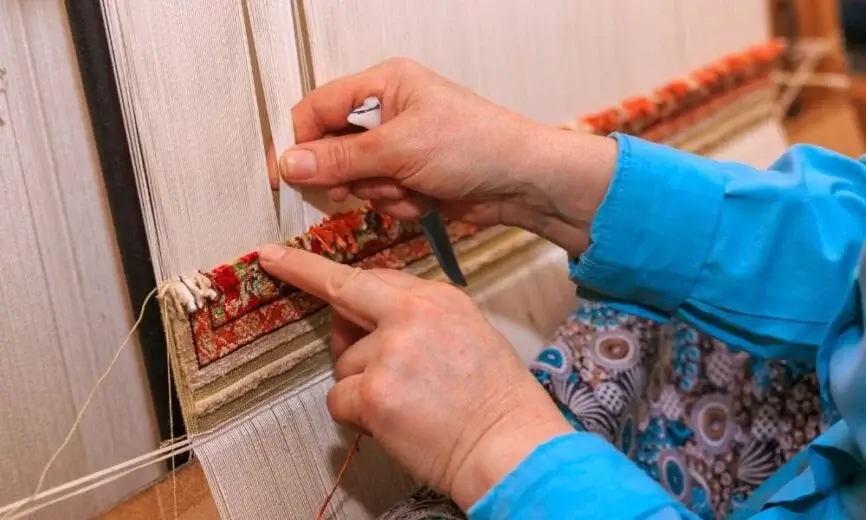
a women placing knots in a carpet, knot density is higher in carpet.

Introduction to Knot Density


When look at the back of a carpets, one detail that helps us understand their quality and structure which is “knot density.” It seem like a technical term, but it’s actually quite simple. Knot density refers to how many knots are tied in a specific area of the carpet, knot density is usually measured in knots per square inch (KPSI) or per square meter. Since each knot in a handmade carpet is tied by hand, this number gives us an idea of how much time and effort went into making it. A handmade carpet is a piece of work that takes patience, skill, and time. Each knot is placed by a weaver, working day after day, often for months. So, a higher knot density means that the carpet took longer to make. It also means the design can be more detailed, as smaller knots allow for finer patterns, similar to how more pixels make an image clearer.

However, more knots do not always mean a better carpet. That’s an important point to understand. Many tribal and village carpets have lower knot counts, but they are just as beautiful in their own way. These carpets often have plushy texture and stronger colors. They may not have tiny details, but they carry their own identity and are known for their durability. In some cases, a lower knot count allows for thicker wool and a softer texture. Different regions and cultures follow different styles. In places like Persia or Kashmir, some weavers aim for high knot densities to create detailed floral patterns. In contrast, regions like Balochistan or parts of Central Asia may produce carpets with fewer knots but striking, geometric designs. Both types have their own identity and beauty. From a buyer’s point of view, knot density can help explain the price and value of a carpet, but it should not be the only factor. Materials like wool, silk, or cotton, the natural dyes used, design, and the origin of the carpet also matter. For someone new to handmade carpets, understanding knot density is a good starting point. It helps you understand the hard work behind the rug and the fair pricing.

Types of Knots in Capets

Different types of knots are used to create various levels of density, which directly affects the carpet’s texture, durability, and detail. Here are six types of knots commonly used in handmade carpets, with a focus on how each relates to knot density:

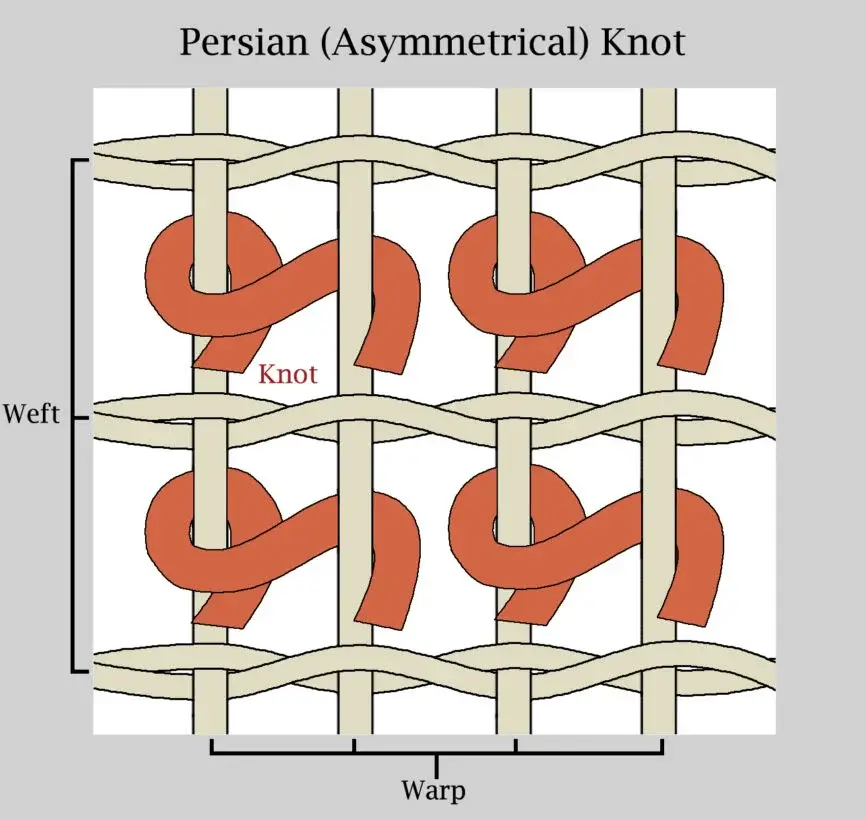
Explanation of Persian(Asymmetrical) knots with labels

Persian Knot (Senneh Knot)

The Persian knot, also known as the Senneh knot, is a popular choice for carpets that require high knot density. This asymmetrical knot is tied around two warp threads unevenly, which allows for finer, more detailed designs. As a result, carpets made with the Persian knot tend to have more knots per square inch and value.

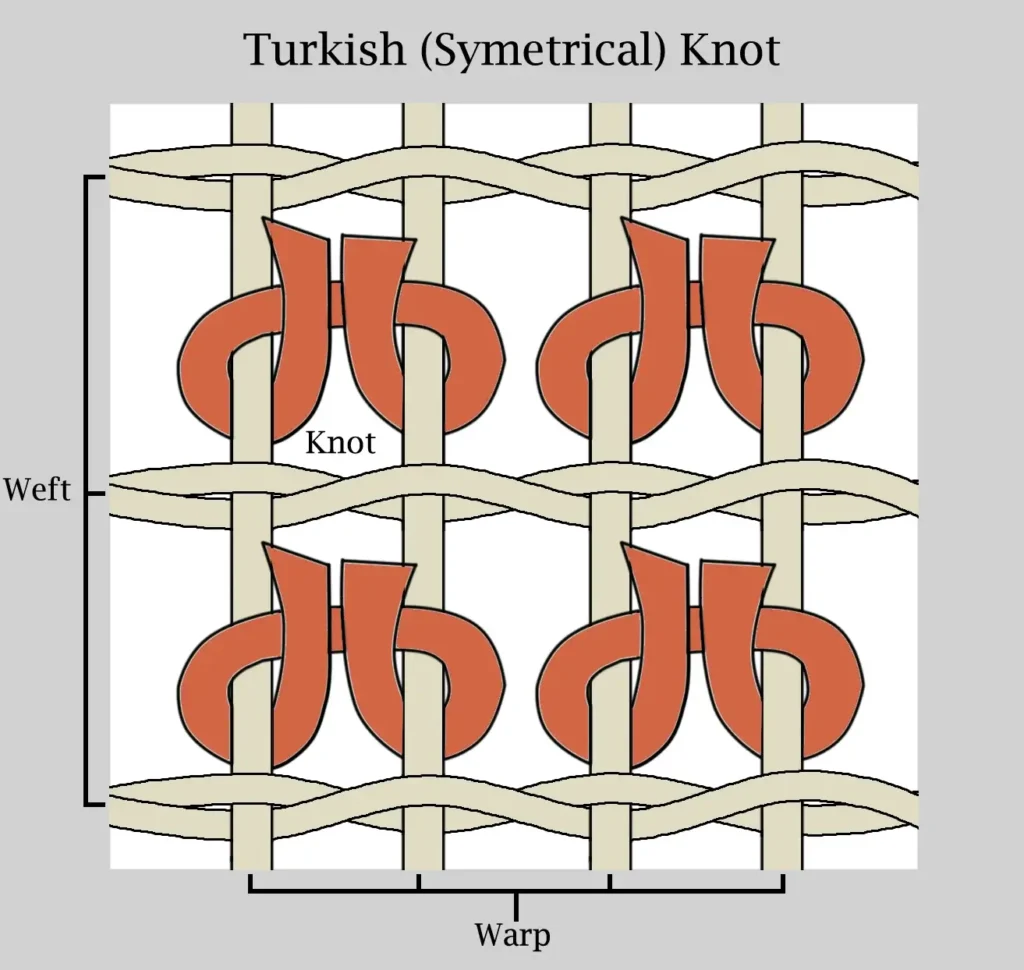
Explanation of Turkish (Symmetrical) knots with labels

Turkish Knot (Ghiordes Knot)

The Turkish knot, or Ghiordes knot, is symmetrical and tied around two warp threads evenly. While this method creates a moderate knot density, it results in a carpet with a stronger and denser pile, making it more durable. The knot density is not as high as the Persian knot, but it still offers good clarity and strength in the design.

Jufti Knot

The Jufti knot uses four warp threads instead of two, which makes the weaving process faster and easier. However, this results in a lower knot density compared to the Persian or Turkish knots. Carpets made with Jufti knots are usually less detailed and are often larger in size, with fewer knots per square inch.

Tibetan Knot

The Tibetan knot is tied using a rod and forms a medium knot density. This type of knot provides a balance between speed and detail and also allow for fairly detailed patterns without the extreme density found in Persian carpets. It’s often used in Tibetan and Nepalese carpets.

Single Knot (Asymmetrical)

The single knot is another name for the Persian knot, which is highly valued for its high knot density. This knot creates a dense and fine texture, making it ideal for carpets that require complex, detailed designs. The high knot density gives carpets a smooth, tight feel, which enhances their overall quality and durability.

Double Knot (Symmetrical)

The double knot is also known as the Turkish knot and is characterized by its symmetrical structure. Carpets made with double knots tend to have a moderate knot density. While they may not be as densely packed as Persian knots, the double knot provides strength and durability, making it ideal for everyday use without sacrificing too much detail.

Spanish Knot

Used in historic Spanish carpets, this knot is looped around a single warp thread, producing a lower knot density. It’s rarely used today but remains part of weaving history.

Open Back Knot (Looped Pile)

In some Tibetan and Nepalese styles, the yarn is looped but not cut, creating a looped pile instead of individual knots. The density is lower, but it gives a soft, cushioned feel.

Chinese Knot (Peking Knot)

Used in traditional Chinese rugs, this is a variation of the asymmetrical knot. These carpets often show medium to high knot density and very fine detailing, especially in antique pieces.

Indo-Nepali Knot (Hybrid Knot)

This is a mix of Tibetan and Persian weaving techniques. The yarn is looped over a rod, cut, and then locked in place. The result is a moderate knot density with a distinct texture.

How to Check Knot Density in Carpet?

Step 1: Identify the Type of Carpet

Before measuring knot density, you need to know the type of carpet you are dealing with. Different carpets, such as Persian or Turkish, have varying knotting styles and densities.

Step 2: Find a Small Section to Measure

Choose a small, unobtrusive section of the carpet to check the knot density. It’s best to avoid any visible or prominent areas.

Step 3: Count the Number of Knots in a Square Inch

Use a magnifying glass or a ruler to measure a 1-inch square. Count the number of knots within that square. Knots are typically tied in rows, so make sure to count both horizontally and vertically.

Step 4: Multiply the Counts for the Total Knot Density

Multiply the number of knots counted horizontally by the number of knots counted vertically. This will give you the total knot density for that square inch.

Step 5: Calculate the Overall Knot Density

Repeat this process in multiple sections of the carpet to get an average. This ensures you get an accurate representation of the carpet's knot density overall.

By following these steps, you can determine the knot density of your carpet, which is crucial for evaluating its quality and craftsmanship. A higher knot density generally indicates a finer, more durable carpet.

Pro Tip: How can the knot density of a carpet affect its durability and value? This question not only adds value to the content but also encourages users to engage with the topic and explore how knot density impacts the quality of carpets. It can help drive more traffic by tapping into user queries around carpet durability and value.

Knot Density Range and Carpet Quality Comparison


Knot Density (KPSI) Quality Description Durability Typical Use
Below 80 KPSI Low Knot Density – Basic quality Moderate to Low Entry-level rugs, casual spaces
80–120 KPSI Medium Knot Density – Fair quality Good Living rooms, mid-range use
120–200 KPSI High Knot Density – Fine quality High Formal areas, higher-end homes
200+ KPSI Very High Knot Density – Premium quality Very High Collector’s items, luxury interiors

Note: KPSI stands for Knots Per Square Inch, a key factor in judging the craftsmanship, value, and durability of handmade carpets.

Knot Density of Carpets by Region


🇵🇰 Pakistan
Density: 80–200 KPSI
Styles: Pak Persian, Mori Bokhara
Traits: vibrant colors, balanced weave, affordability.
🇮🇷 Iran
Density: 120–600+ KPSI
Styles: Tabriz, Isfahan, Nain
Traits: Premium silk, detailed patterns and quality.
🇮🇳 India
Density: 60–300 KPSI
Styles: Jaipur, Kashmiri Silk
Traits: Heritage design, vintage weaving, warm tones.
🇦🇫 Afghanistan
Density: 80–160 KPSI
Styles: Khal Mohammadi, Ersari
Traits: Tribal roots, earthy tones, heavy wool texture.
🇹🇷 Turkey
Density: 100–300 KPSI
Styles: Hereke, Oushak
Traits: Balanced knot, Mediterranean tones, double knots.
🇨🇳 China
Density: 150–500 KPSI
Styles: Silk Rugs, Art Deco
Traits: detailing, sheen, high durability.

Common Misconceptions About Handmade Carpets


1. Are handmade carpets always expensive?

Not all handmade carpets are high-priced. While some rare, high-knot rugs can be expensive, many affordable, high-quality handmade carpets are available from Pakistan, India, and Afghanistan. Their price reflects the craftsmanship, not luxury alone.

2. Do handmade carpets look old-fashioned?

Not at all. Today’s artisans mix classic patterns with modern color schemes and styles. Handmade carpets now fit well in both traditional and contemporary spaces, from minimal studios to high-end urban homes.

3. Is machine-made quality equal to handmade?

Machine-made carpets are faster to produce but lack the strength, detail, and uniqueness of handmade rugs. Each knot in a handmade carpet is tied by hand, creating a one-of-a-kind piece with superior durability and beauty.

4. Are handmade carpets hard to clean or maintain?

Not really. Handmade rugs are usually crafted using wool or silk, both of which are naturally dirt-resistant. With light vacuuming and occasional professional washing, they can look fresh for decades.

top